
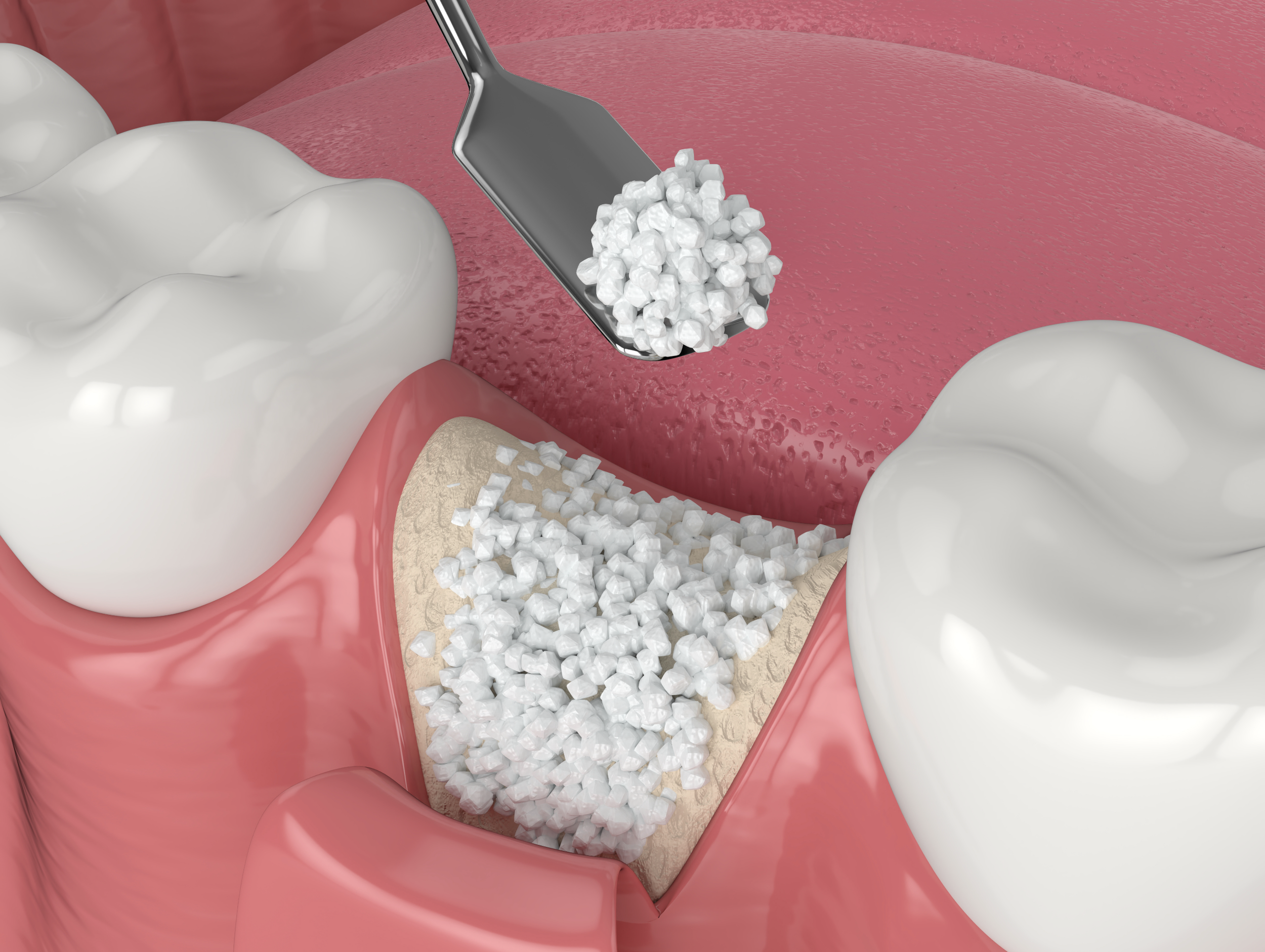
Bone Grafting
The bone in your upper and lower jaws depends on stimulation from the tooth root to maintain its volume and strength. After a tooth is removed, the bone in that area naturally begins to shrink. Placing a bone graft at the time of extraction can help preserve the shape and structure of the site, creating a stronger foundation for a future dental implant and reducing the likelihood of more extensive grafting later.
What is bone grafting?
A bone graft adds material to a part of the jaw that has thinned, so new bone grows through it and the site becomes strong enough to hold an implant. It is usually a step rather than a destination, done either before an implant or at the same appointment as an extraction. The graft material most often comes from a tissue bank, which means no second surgical site on your own body.
Which graft you need depends on where the bone is missing and how much of it.
Socket preservation. Done at the moment a tooth comes out. Filling the empty socket holds its shape and slows the bone loss that otherwise begins immediately, which keeps a future implant simple.
Major grafting. For significant loss after trauma or long-term absence of teeth, where larger volumes of bone are needed to rebuild the ridge.
-
01
Imaging and assessment
A 3D scan measures exactly how much bone is there and how much is needed. Dr. Wu will tell you whether a graft is genuinely required or whether the site will take an implant as it stands.
-
02
Placing the graft
A small incision exposes the site, the material is packed in and covered, and the area is closed with sutures. Most grafts are done under [local anesthetic or IV sedation] and take well under an hour.
-
03
Healing
Your own bone grows into the graft and replaces it. This takes a few months and cannot be rushed, which is why grafting is planned early in a treatment sequence rather than fitted in later.
-
04
Implant placement
Once the site has integrated, it is rescanned and the implant goes in. Where the bone loss is minor, the graft and the implant can sometimes happen in the same appointment.


FAQ's
Is bone grafting painful?
1
Most patients describe more pressure and soreness than sharp pain, especially since the area is numbed during the procedure. Over-the-counter pain relievers are usually enough for the days afterward.
Can my body reject the graft material?
2
Because the material is processed and comes from a tissue bank, it's biocompatible and rejection is rare. Your own bone grows into it over time, which is what makes it part of you rather than something your body has to fight off.
What can I eat while it heals?
3
Stick to soft foods for the first week or so, and avoid chewing directly over the graft site. Dr. Wu will give you specific guidance based on where the graft was placed.
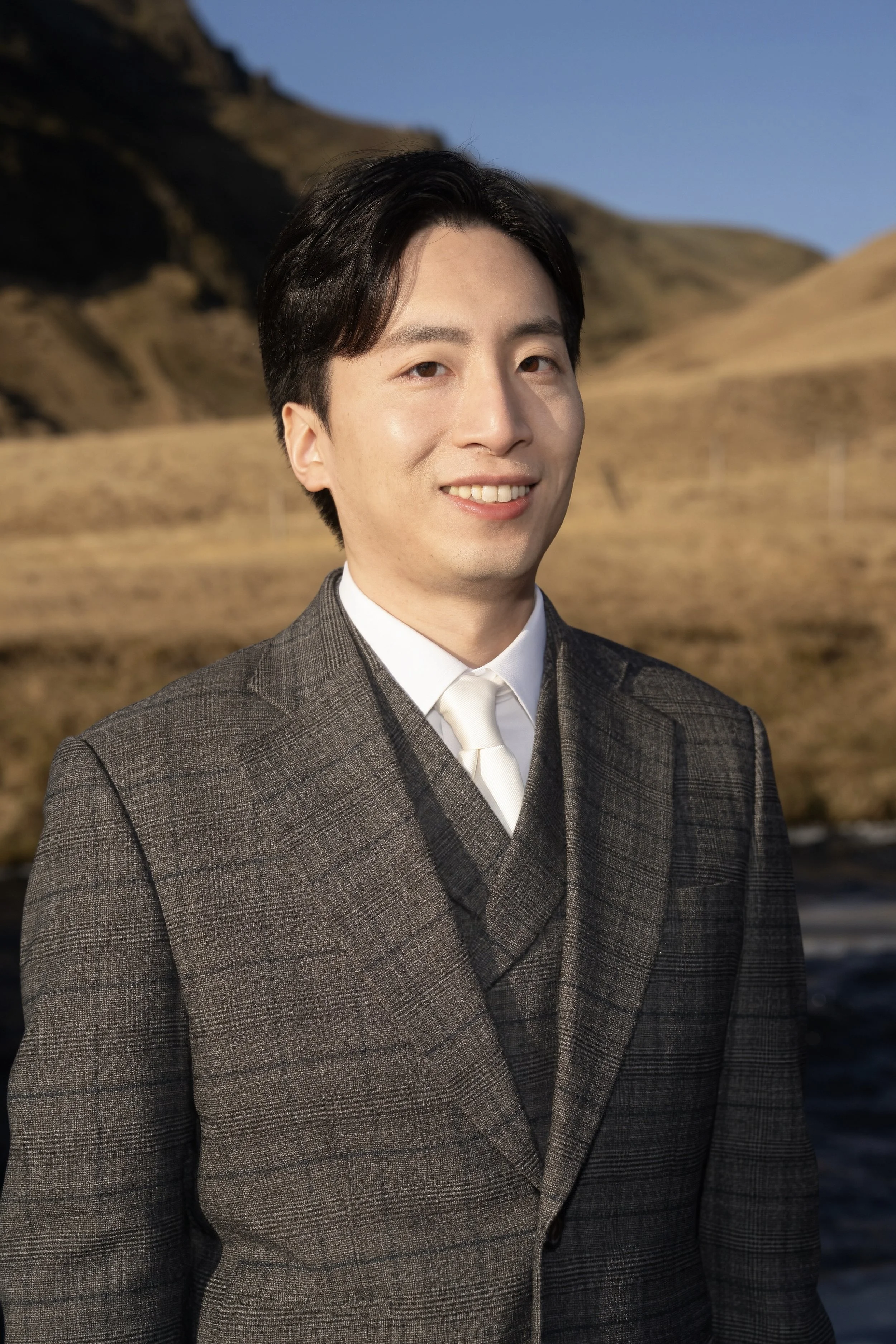
Advanced Training in Dentistry and Medicine
Dr. Wu earned his dental degree from Harvard, his medical degree from NYU Grossman School of Medicine, and a master's degree in immunology from Harvard Medical School. His extensive training in both dentistry and medicine provides a comprehensive foundation for implant surgery, bone grafting, anesthesia, and the management of complex surgical cases.