
Sinus lift
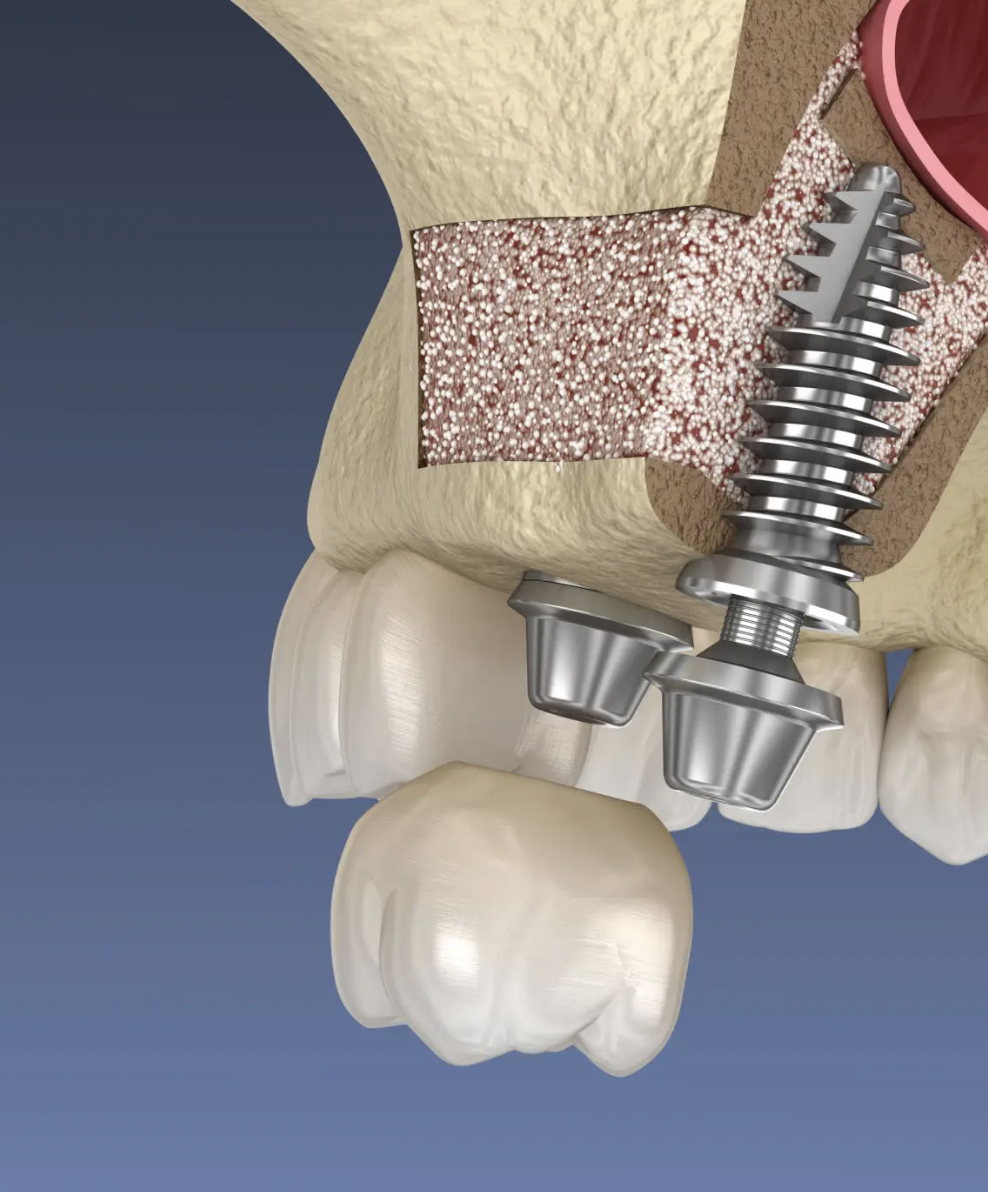
The upper back jaw often has limited bone height, with the maxillary sinus located directly above it. After a molar is lost, the remaining bone may continue to diminish until there is not enough support for a dental implant. A sinus lift is a bone-grafting procedure in which the sinus membrane is gently elevated and grafting material is placed beneath it to create the height and stability needed for implant placement.
What is a sinus lift?
A sinus lift, also called sinus augmentation, adds bone to the upper jaw in the area behind the premolars. It is needed when the floor of the maxillary sinus sits too low, or the bone beneath it is too thin, for an implant to hold.
That situation is common rather than unusual. Upper molars sit closer to the sinus than any other teeth, and once one is lost the bone that held it begins to resorb. Gum disease speeds it up, and some people simply have a larger sinus to begin with. By the time an implant is being considered, there is often only a few millimetres of bone left to work with.
The procedure lifts the sinus membrane upward and places graft material into the space created underneath. Over the following months your own bone grows through it, and the site becomes solid enough to hold an implant. It is a preparatory step rather than a destination, done so the implant that follows has something real to anchor into.
Dr. Brendan Wu is a Harvard and NYU-trained oral and maxillofacial surgeon with degrees in both dentistry and medicine, and has published research on dental implants. Consultations at both the Portland and Hood River offices.
-
01
Imaging and assessment
A 3D scan measures how much bone is actually there and where the sinus floor sits. Dr. Wu goes through it with you and explains whether a lift is genuinely needed, or whether the site will take an implant as it stands.
-
02
Planning
The scan becomes the surgical plan, worked out before the day rather than during it. That is what keeps the procedure short and the approach to the membrane controlled.
-
03
The lift
A small opening is made in the side of the jaw, the sinus membrane is lifted carefully away from the bone, and graft material is placed into the space beneath it. The site is closed with sutures. [Sedation options are settled in advance.]
-
04
Healing and implant placement
The graft takes several months to integrate with your own bone, and that timeline is set by biology rather than convenience. Once it has, the site is rescanned and the implant goes in. Where only a small amount of lift is needed, the graft and implant can sometimes happen together.

FAQ's
Most patients describe mild discomfort and some swelling rather than sharp pain, especially since the area is numbed during the procedure. Over-the-counter pain relievers are usually enough afterward.
Is a sinus lift painful?
1
Avoid blowing your nose, sneezing forcefully, or using a straw for the first couple of weeks, since the pressure can dislodge the graft. Dr. Wu will also let you know whether it's safe to fly before you book any travel.
Are there activity restrictions afterward, like flying or blowing my nose?
2
What are the risks specific to this procedure?
3
The main one is a small tear in the sinus membrane during the lift, which Dr. Wu can usually repair in the same appointment.

Advanced Training in Dentistry and Medicine
Dr. Brendan Wu is an oral and maxillofacial surgeon with advanced education in both dentistry and medicine. He earned his dental degree from Harvard School of Dental Medicine, his medical degree from NYU Grossman School of Medicine, and a master’s degree in immunology from Harvard Medical School. His comprehensive academic and surgical training supports his expertise in dental implant surgery, bone grafting, anesthesia, facial trauma, and the management of complex oral and maxillofacial conditions.