
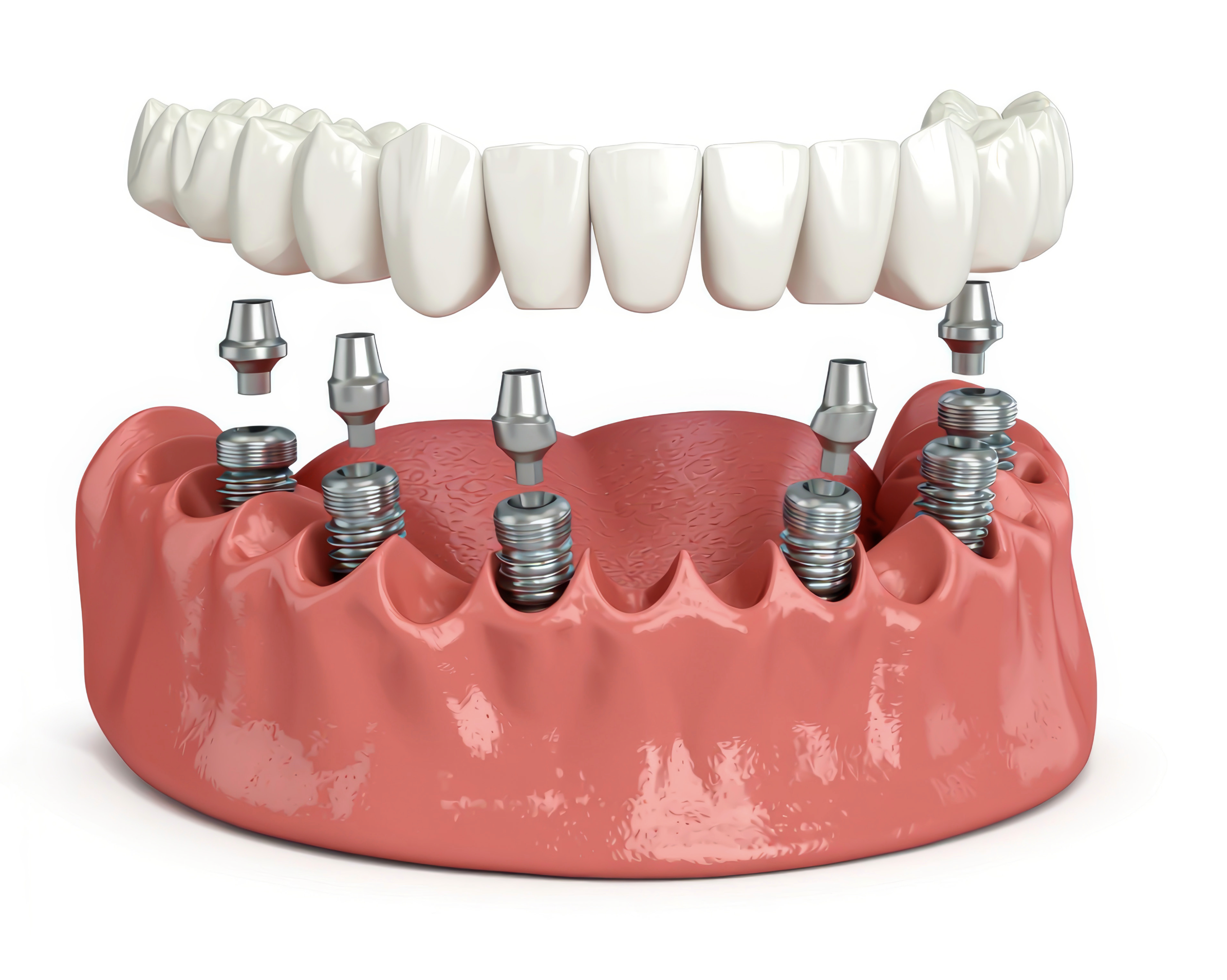
Full arch implants
A traditional denture rests on the ridges of the upper or lower jaw and may move during speaking or eating. A fixed full-arch restoration is supported by implants that integrate with the jawbone, providing greater stability while eating and eliminating the need for nightly removal.
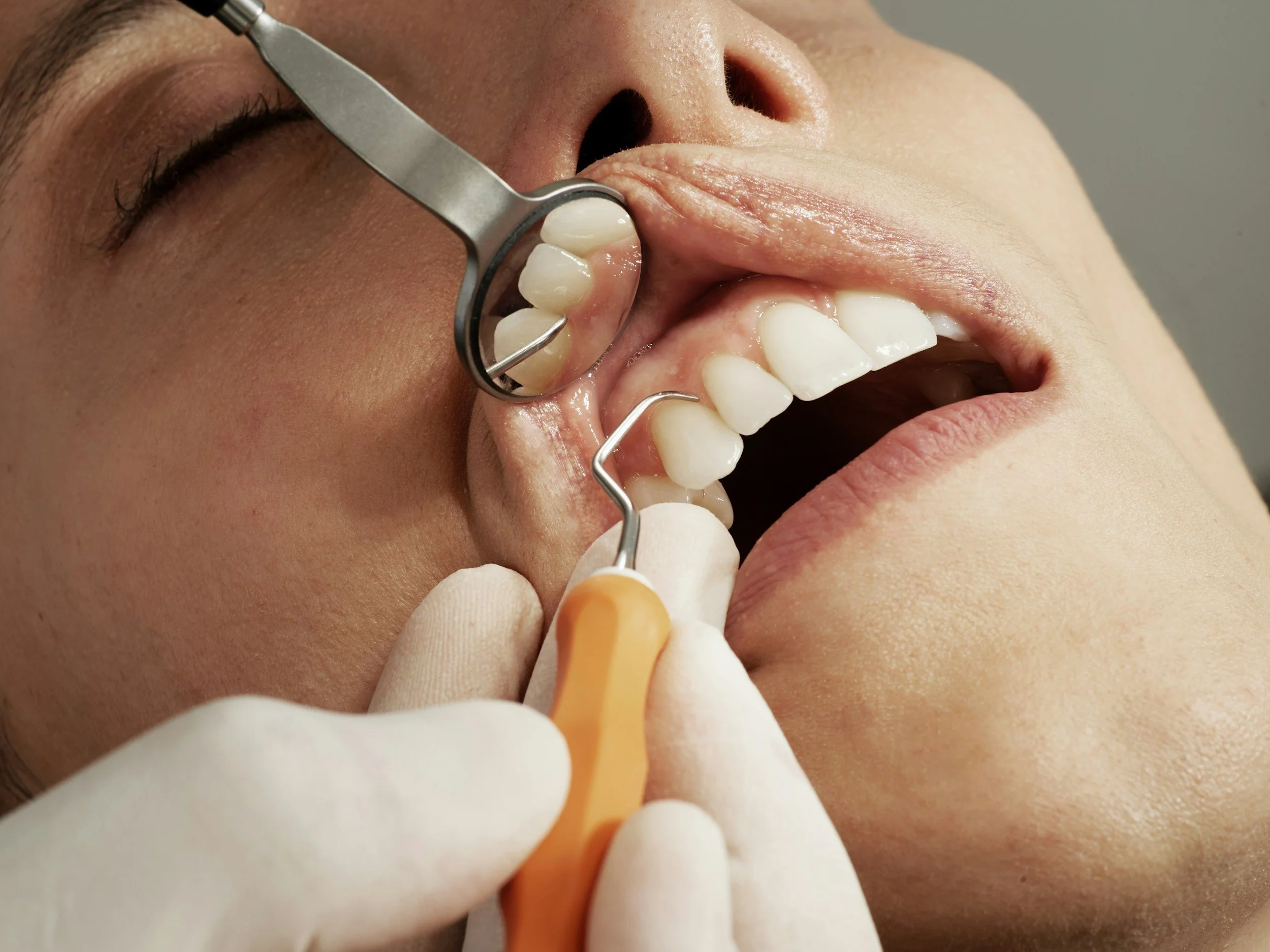
What are full arch implants?
Full arch implants replace every tooth in the upper jaw, the lower jaw, or both, using a small number of implants to carry one fixed bridge. Instead of replacing teeth one at a time, a handful of posts positioned where the bone is strongest support the entire arch.
Most people come to this after years of trouble rather than all at once: teeth lost gradually, a denture that has never really settled, or a mouth where what remains is not worth saving. The difference from a denture is structural. Implants fuse to the jaw and load it the way roots did, so the bone underneath keeps working instead of continuing to shrink. That is also why a fixed arch stays stable while a denture needs relining as the ridge changes shape beneath it.
It is not the right answer for everyone. It depends on how much bone is there, your general health, and whether the teeth still in place are worth keeping. Dr. Wu will tell you plainly if a different approach suits your mouth better.
-
01
Consultation and imaging
A 3D scan shows bone volume and density across the whole arch, which is what determines how many implants are needed and where they can go. Dr. Wu goes through the scan with you and explains what your mouth will support.
-
02
Planning
The scan becomes a digital plan and a surgical guide, worked out before the day rather than during it. Implant positions are decided by where the final teeth need to sit, not the other way round.
-
03
Surgery
Any remaining teeth that cannot be kept come out, and the implants go in during the same appointment. [Sedation options are settled in advance.] Where the bone allows, a temporary fixed bridge goes on the same day, so you do not leave without teeth.
-
04
Healing and the final arch
The implants integrate with the bone over several months. Once they have, the final arch is made and fitted. [Confirm: made in-house or with the restorative dentist?]

FAQ's
How many implants will I need?
1
Most full arch restorations use four to six implants per arch, positioned where your bone is strongest to support the whole bridge. Dr. Wu determines the exact number and placement from your scan.
Will I be able to eat normally with the temporary bridge?
2
You'll start with softer foods while the surgical sites heal, then gradually return to a normal diet as things settle. The temporary bridge isn't built for hard or chewy foods, but the final arch made once you've healed is.
How long do full arch implants last?
3
The implants themselves are designed to last decades, often a lifetime, since they fuse with the bone. The visible teeth on top may need adjustment or replacement over the years the way any dental work does.
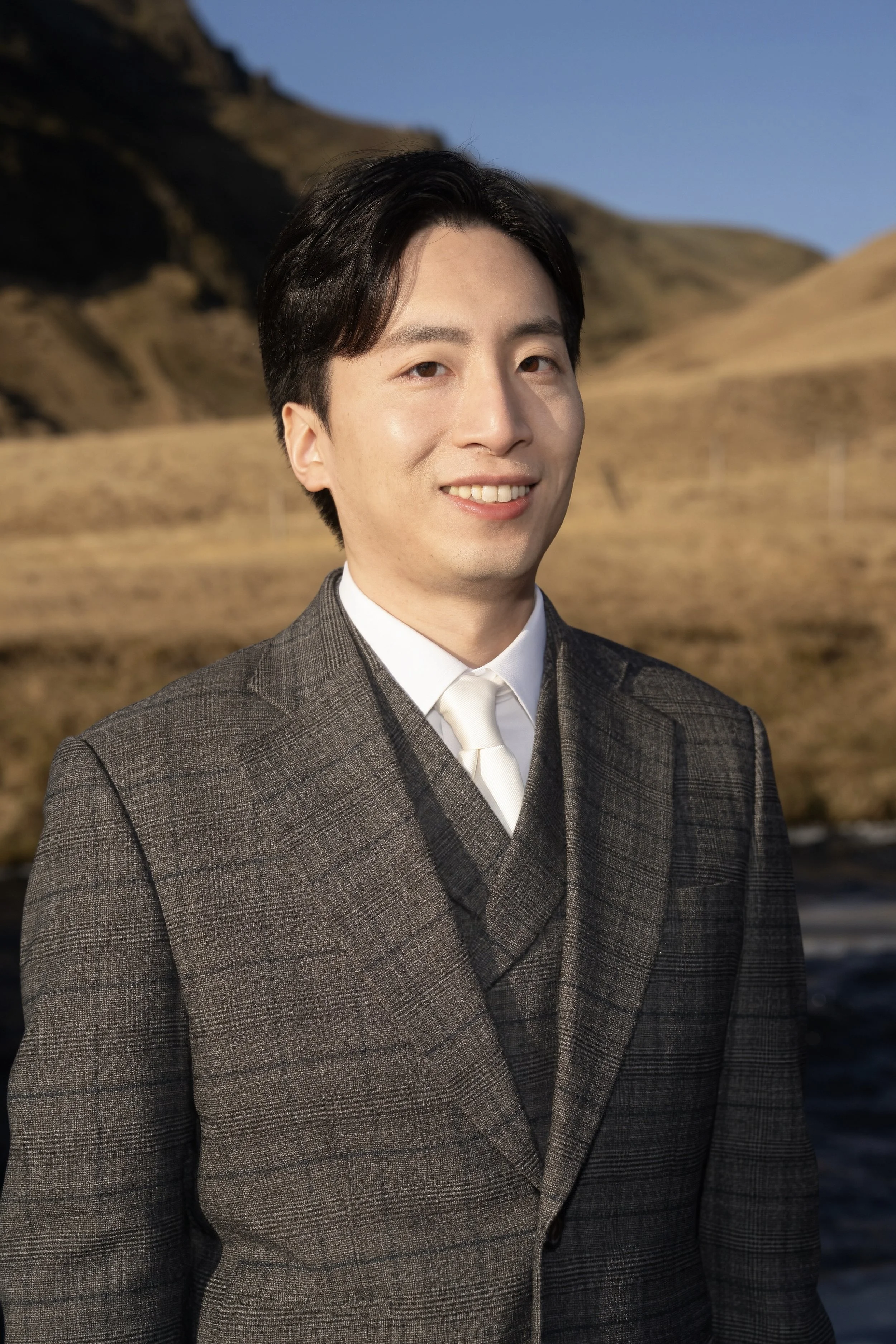
Advanced Training in Dentistry and Medicine
Dr. Wu earned his dental degree from Harvard, his medical degree from NYU Grossman School of Medicine, and a master's degree in immunology from Harvard Medical School. His extensive training in both dentistry and medicine provides a comprehensive foundation for implant surgery, bone grafting, anesthesia, and the management of complex surgical cases.