
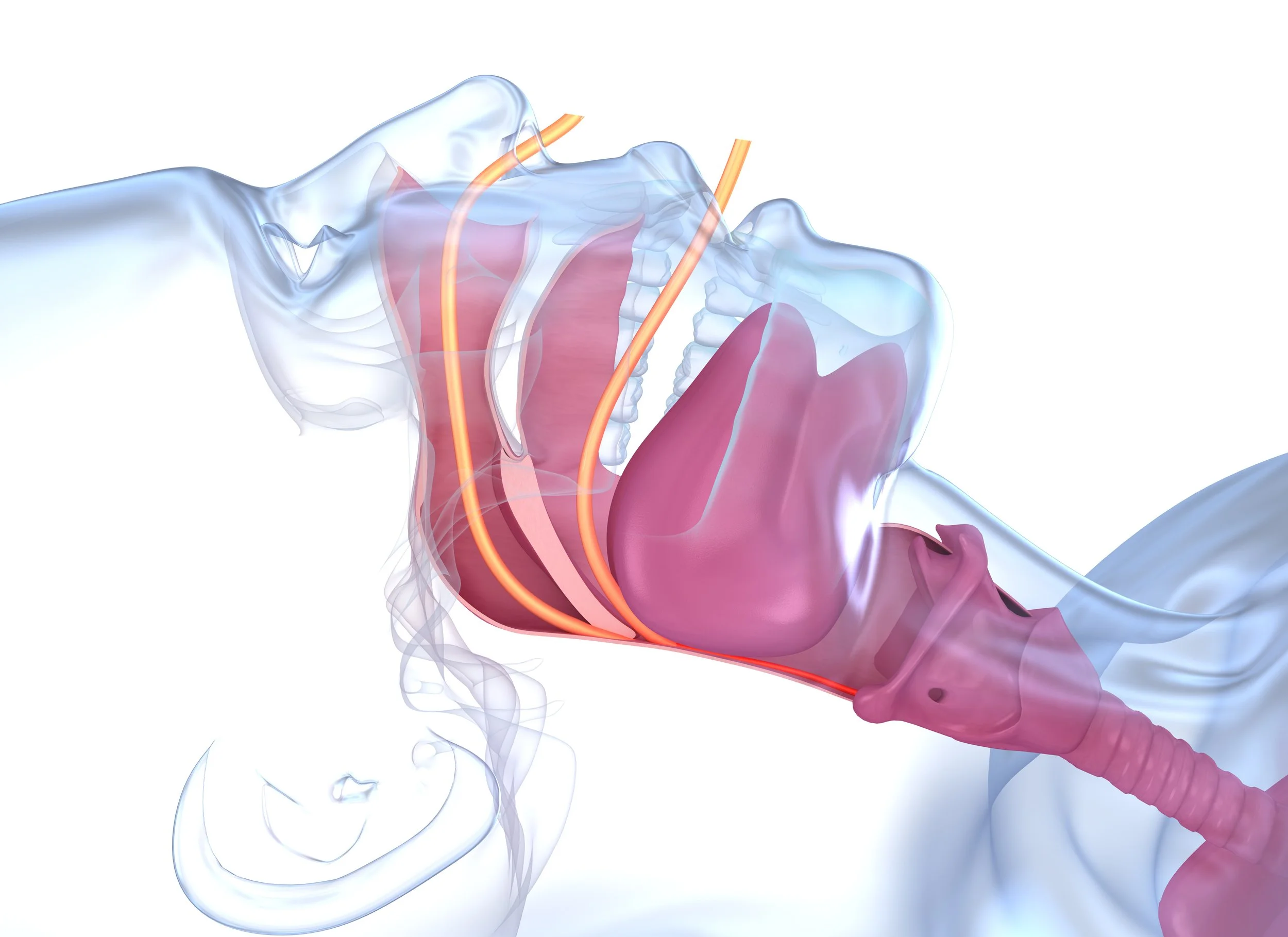
Sleep apnea
Every breath at night depends on an airway staying open, and for some people the anatomy will not allow it. Where CPAP has failed or cannot be tolerated, surgery can change the structure itself, so the airway stays open without a machine holding it there.
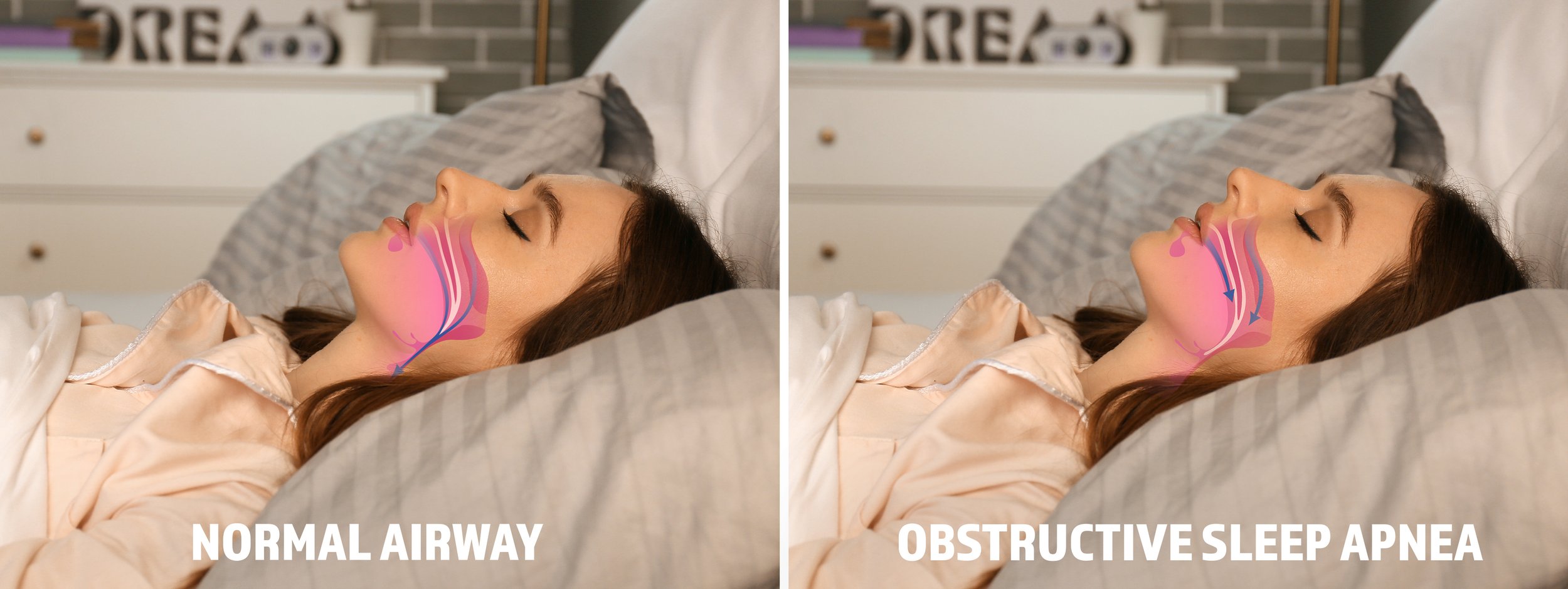
What is sleep apnea surgery?
Obstructive sleep apnea means the airway closes repeatedly during sleep, cutting off breathing for seconds at a time, over and over, all night. Most people never wake up enough to notice. What they notice is the exhaustion, the difficulty concentrating, and eventually the strain it puts on the heart.
CPAP is the first-line treatment and it works well for many people. For others it does not, either because the anatomy is the underlying problem or because the machine is impossible to tolerate night after night. That is where surgery comes in. Depending on what is causing the obstruction, treatment can mean repositioning the upper and lower jaws to open the space behind the tongue, or removing soft tissue that is narrowing the airway.
Treatment always begins with a diagnosis. If you have not had a sleep study, that comes first, through your physician or a sleep clinic. Once there is a diagnosis and a study to work from, Dr. Wu can evaluate the airway itself and tell you whether your anatomy is the kind that surgery can help. Evaluations are available at both the Portland and Hood River offices.
FAQ's
How successful is surgery compared to CPAP?
1
Success is measured by how much the airway opens and how many nighttime breathing pauses go away, and results vary by procedure and anatomy. Jaw repositioning tends to have the highest success rates for patients whose anatomy is the root cause. Dr. Wu will walk you through what's realistic for your case after reviewing your airway and sleep study.
What is recovery like after surgery?
2
It depends on which procedure you need. Soft tissue procedures usually mean a shorter recovery of one to two weeks. Jaw repositioning is more involved, with swelling and a modified diet for several weeks while the bone heals.
Is sleep apnea surgery covered by insurance?
3
Because OSA is a diagnosed medical condition, surgery is often covered by medical insurance once conservative options like CPAP have been tried and documented. Our team can help verify your specific coverage before you commit to treatment.

Advanced Training in Dentistry and Medicine
Dr. Brendan Wu is an oral and maxillofacial surgeon with advanced education in both dentistry and medicine. He earned his dental degree from Harvard School of Dental Medicine, his medical degree from NYU Grossman School of Medicine, and a master’s degree in immunology from Harvard Medical School. His comprehensive academic and surgical training supports his expertise in dental implant surgery, bone grafting, anesthesia, facial trauma, and the management of complex oral and maxillofacial conditions.