
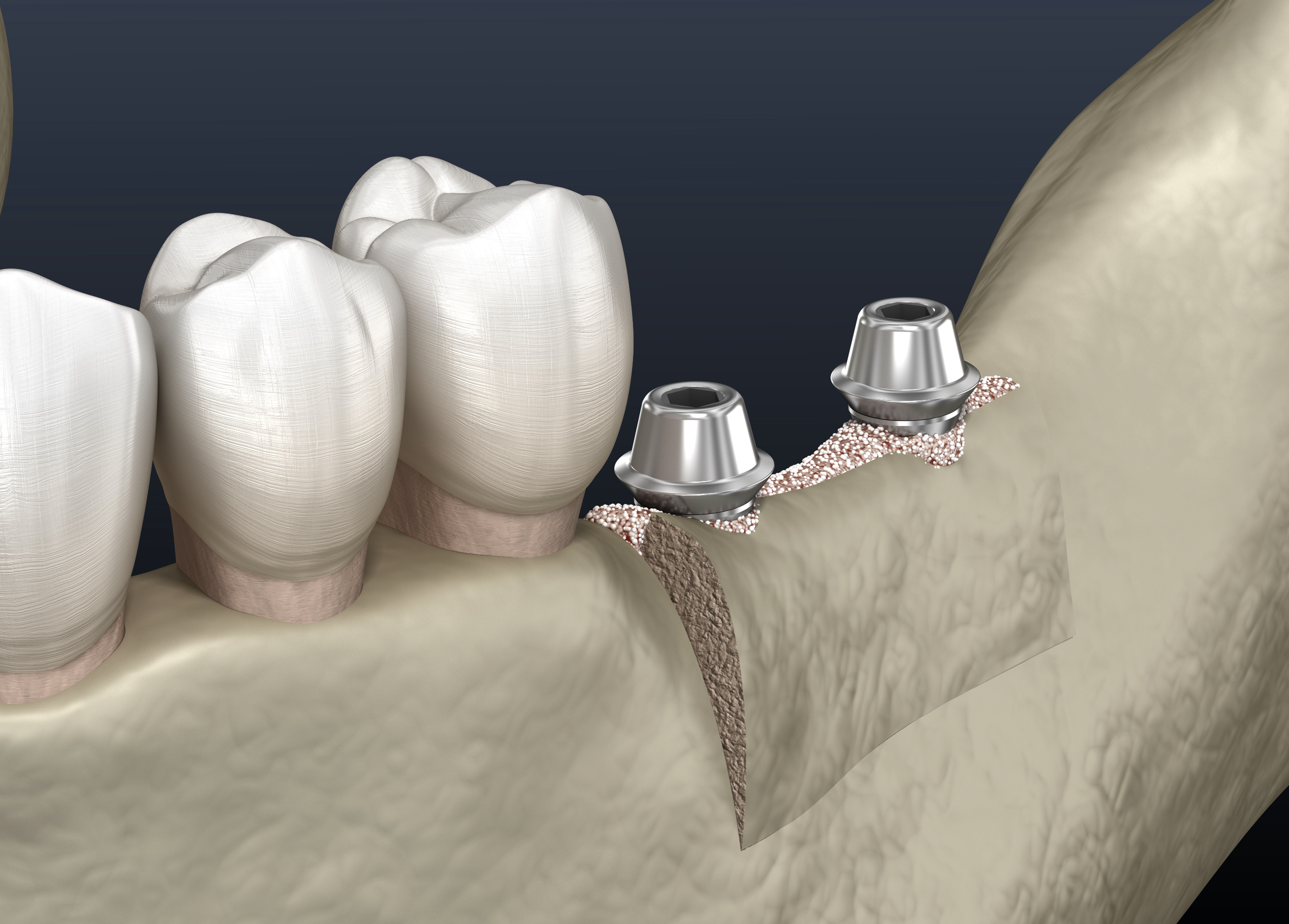
Ridge Augmentation
The dental ridge is the curved area of jawbone that once supported your teeth. When teeth have been missing for an extended period, the ridge may gradually narrow and flatten, leaving insufficient bone to support an implant. Ridge augmentation rebuilds the area to create a stronger foundation for implant placement.
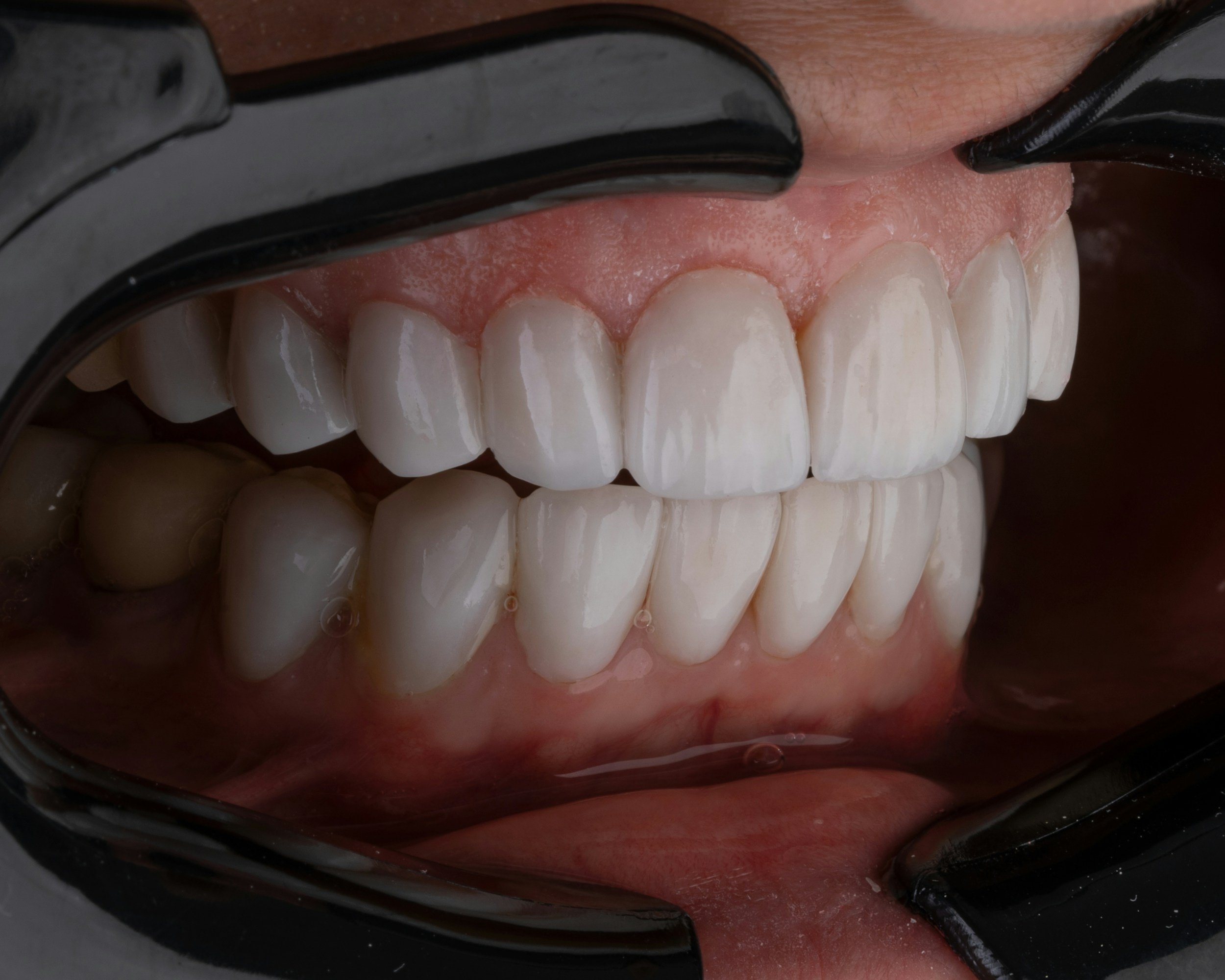
What is ridge augmentation?
Ridge augmentation is a bone graft that rebuilds the height and width of the jaw where it has been lost. It is used when the ridge has collapsed after tooth loss, gum disease or injury, and there is no longer enough bone for an implant to sit in the right position.
The bone loss is not random. A root loads the jaw every time you bite, and that load is what keeps the bone dense. Remove the root and resorption starts within months, taking the width first and then the height. After a few years, what is left can be a narrow blade of bone rather than the broad ridge an implant needs.
Rebuilding it means placing graft material along the ridge, covering it, and letting your own bone grow through over several months. Where the loss is mild, the graft and the implant can go in together. Where it is significant, the graft comes first and the implant follows once the site has healed.
Dr. Brendan Wu is a Harvard and NYU-trained oral and maxillofacial surgeon with degrees in both dentistry and medicine, and has published research on dental implants. Consultations at both the Portland and Hood River offices.
-
01
Imaging and assessment
A 3D scan measures the ridge in three dimensions, which is what a panoramic X-ray cannot do. Dr. Wu goes through it with you and explains how much bone is there, how much is needed, and whether a graft is genuinely required.
-
02
Planning
The scan becomes the plan, worked out before the day. Where an extraction is also needed, the two are sequenced together so you are not having the same site opened twice.
-
03
The graft
Graft material is placed along the ridge and covered with a membrane to hold it in position while it heals. The site is closed with sutures. [Sedation options are settled in advance.]
-
04
Healing and implant placement
The graft integrates with your own bone over several months, and that timeline is set by biology rather than convenience. Once the site is solid, it is rescanned and the implant goes in.

FAQ's
Will ridge augmentation change the shape of my gums or smile?
1
The goal is to rebuild what was lost, not add anything extra, so the result should look like your natural ridge rather than a change to it. Any difference you notice should be an improvement in fullness where the bone had collapsed.
What happens if I get an implant without it?
2
Without enough bone, an implant can end up angled wrong, exposed at the edges, or without enough support to last. Ridge augmentation exists so the implant has a proper foundation from the start.
Is ridge augmentation covered by insurance?
3
It depends on your plan and why the bone loss occurred. Our team can help you understand your coverage before treatment begins.

Advanced Training in Dentistry and Medicine
Dr. Wu earned his dental degree from Harvard, his medical degree from NYU Grossman School of Medicine, and a master's degree in immunology from Harvard Medical School. His extensive training in both dentistry and medicine provides a comprehensive foundation for implant surgery, bone grafting, anesthesia, and the management of complex surgical cases.