
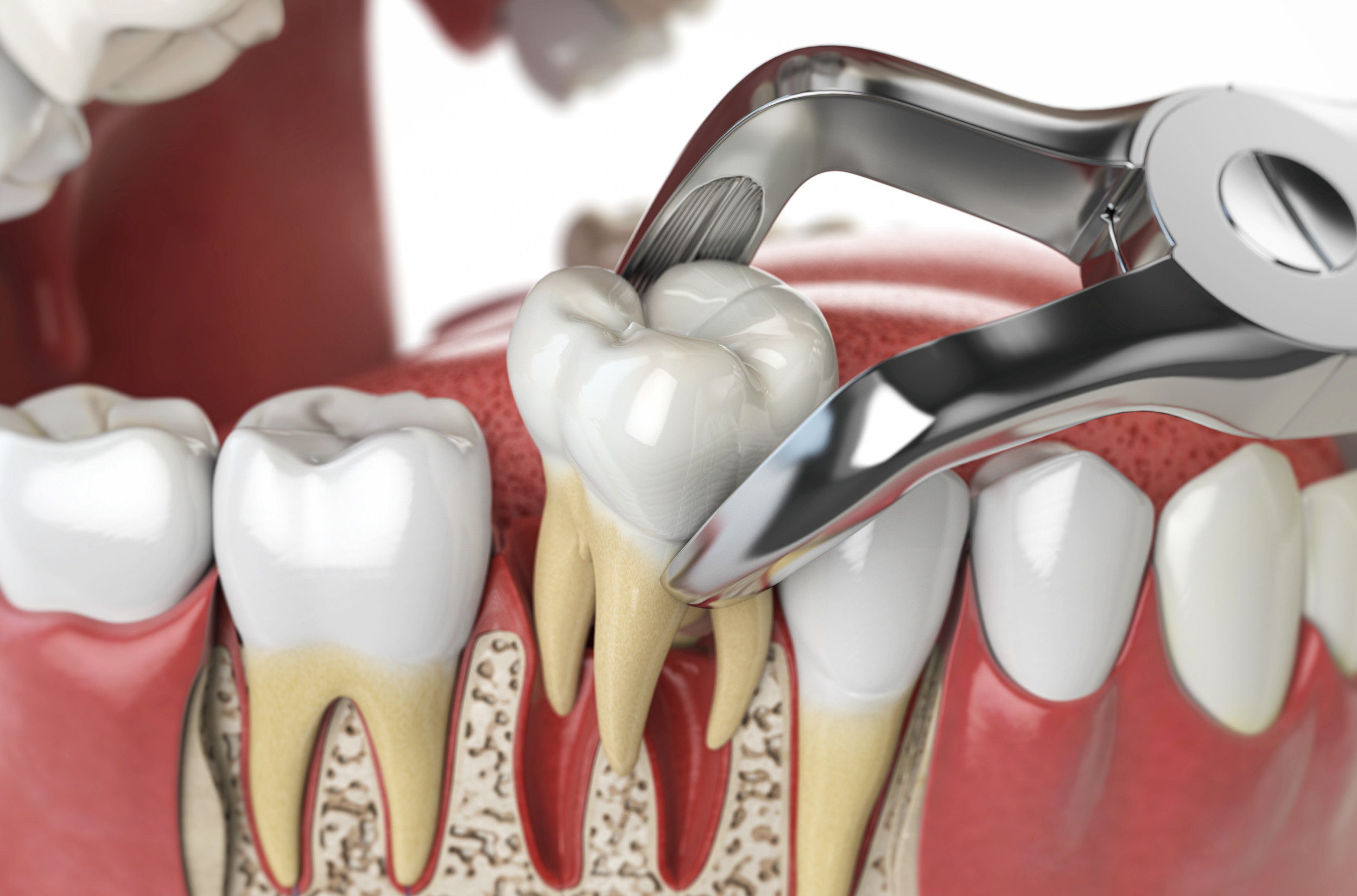
Tooth extraction
A tooth extraction is the careful removal of a tooth that cannot be predictably restored or is creating problems for the surrounding teeth, bone, or gums. An extraction may be recommended for severe decay, infection, significant damage, advanced gum disease, overcrowding, or preparation for another treatment. The goal is to relieve discomfort, protect your oral health, and create the best foundation for healing or future tooth replacement.

What is a tooth extraction?
An extraction removes a tooth that cannot be repaired, or that is causing a problem by being there. Most are done in a single visit. Some teeth lift out straightforwardly. Others are broken at the gumline, have curved roots, or sit against a nerve, and those need a surgical approach, which is when a general dentist may refer the treatment to an oral surgeon.
The reasons vary for tooth extractions. Decay that has gone too far for a filling or a root canal. A tooth loosened by advanced gum disease. Crowding, where an orthodontist needs space to align the rest of the arch, or a baby tooth is blocking an adult one. A tooth fractured in an accident with too little structure left to restore.
Planning for the area after an extraction is an important part of treatment. Once a tooth is removed, the surrounding bone may begin to lose density and volume, while neighboring teeth can gradually shift into the open space. Dr. Brendan Wu will discuss appropriate tooth-replacement options with you, including whether bone grafting at the time of extraction may help preserve the site and provide support for future dental implant placement.
-
01
Examination and imaging
A 3D scan shows the shape of the roots and their relationship to the nerve and sinus. That is what determines whether this is a simple extraction or a surgical one, and Dr. Wu will tell you which before you commit to a date.
-
02
Anesthesia
Many extractions are comfortable with local anesthetic alone. [Sedation options are available for longer cases or for patients who would rather not be aware of it], and we settle that in advance.
-
03
The extraction
The tooth is loosened and lifted out. Where it is broken or impacted, a small incision and dissolvable sutures are needed. Where an implant is planned, graft material can go into the socket in the same appointment.
-
04
Healing and what comes next
Expect soreness and swelling for a few days, and a soft diet while the site closes. If the tooth is being replaced, the plan for that is already in place before you leave.


FAQ's
Will it hurt, and how long is recovery?
1
The area is numbed before anything happens, so the extraction itself isn't painful. Afterward, expect some soreness and swelling for a few days, tapering off within a week for most simple extractions. Surgical extractions can take a little longer to feel back to normal.
How much does a tooth extraction cost?
2
Cost depends on whether the extraction is simple or surgical, and whether sedation or bone grafting is involved. Our team will give you a clear estimate and walk you through your insurance coverage before you commit to treatment.
Can I drive myself home afterward?
3
With local anesthetic alone, you can typically drive yourself home. If you choose sedation, plan to have someone drive you and stay with you for the rest of the day.

Advanced Training in Dentistry and Medicine
Dr. Wu earned his dental degree from Harvard, his medical degree from NYU Grossman School of Medicine, and a master's degree in immunology from Harvard Medical School. His extensive training in both dentistry and medicine provides a comprehensive foundation for implant surgery, bone grafting, anesthesia, and the management of complex surgical cases. You’re in good hands.