
Oral pathology
Many changes in the mouth are benign, but appearance alone is not always enough to determine their cause. Because concerning conditions are generally easier to manage when identified early, any sore, lump, discoloration, or other abnormal area that does not resolve within the expected healing period should be evaluated.
What is oral pathology?
Oral pathology involves the diagnosis and treatment of diseases affecting the mouth, jaws, salivary glands, and surrounding tissues. In practice, this includes any abnormality that appears and does not resolve, such as an ulcer that fails to heal, a white or red patch, a lump in the cheek or beneath the jaw, an area of numbness, or swelling discovered on a dental X-ray despite causing no symptoms.
Many of these findings are benign. Some are entirely harmless, others require a minor procedure, and a small number may represent the early stages of a condition requiring further treatment. Because appearance alone may not reveal what the tissue is doing, a biopsy is sometimes necessary to establish a diagnosis rather than rely on an assumption.
Receiving a timely answer is important in either situation. If the finding is benign, you gain reassurance. If treatment is needed, early diagnosis generally provides the best opportunity for effective care.
Dr. Brendan Wu is a Harvard and NYU-trained oral and maxillofacial surgeon with degrees in both dentistry and medicine, and completed a six-year residency at NYU Langone and Bellevue Hospital Center. Evaluations at both the Portland and Hood River offices.
-
01
Examination
Dr. Wu looks at the area, asks how long it has been there and whether it has changed, and goes through your medical history. The lesion is photographed and measured so there is a record to compare against.
-
02
Imaging
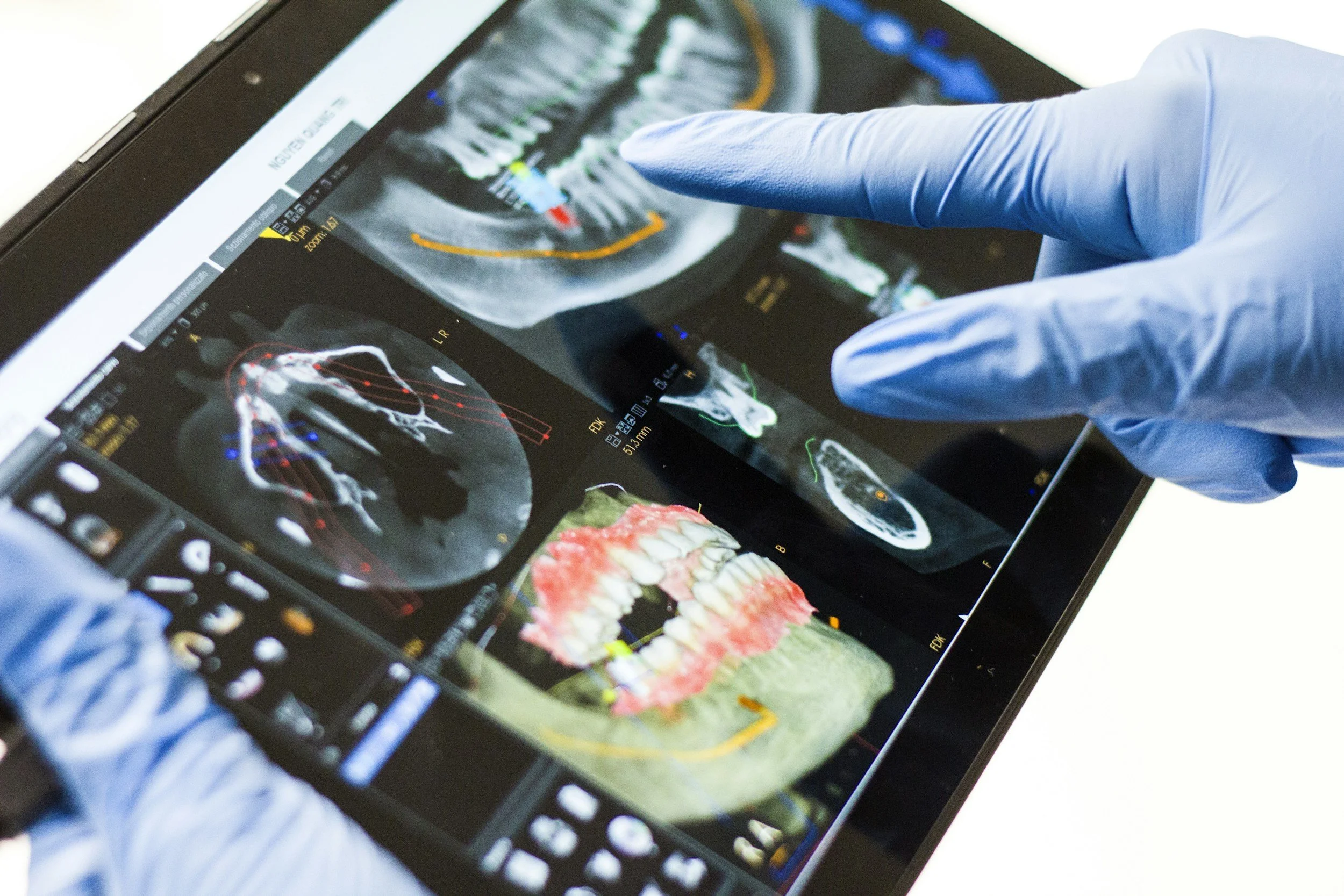
Where something involves bone or sits deeper than the surface, a 3D scan shows its extent and its relationship to nerves, roots and the sinus. Surface lesions often do not need imaging at all.
-
03
Biopsy
Most biopsies are done here under local anesthetic and take a few minutes. A small sample of tissue is removed and sent to a pathology laboratory, where it is examined under a microscope. Most people go back to their normal day straight afterward.
-
04
Results and what follows
Dr. Wu goes through the report with you in person and explains what it means in plain terms. Many findings need nothing more than monitoring or a minor procedure. Where something requires wider treatment, he coordinates the referral and stays involved rather than handing you over.


FAQ's
How long will it take to get my results?
1
Most biopsy results come back within one to two weeks. Dr. Wu will go over them with you as soon as they're in and explain exactly what they mean.
Will the biopsy leave a scar?
2
Most oral biopsies are small enough that any mark fades and becomes hard to notice as the tissue heals. Dr. Wu will let you know what to expect for your specific case.
Are there any risks to having a biopsy?
3
The main risks are minor bleeding or infection at the site, both uncommon and manageable. Serious complications like nerve involvement are rare, especially with the imaging done beforehand to map the area.

Advanced Training in Dentistry and Medicine
Dr. Wu earned his dental degree from Harvard, his medical degree from NYU Grossman School of Medicine, and a master's degree in immunology from Harvard Medical School. His extensive training in both dentistry and medicine provides a comprehensive foundation for implant surgery, bone grafting, anesthesia, and the management of complex surgical cases.