
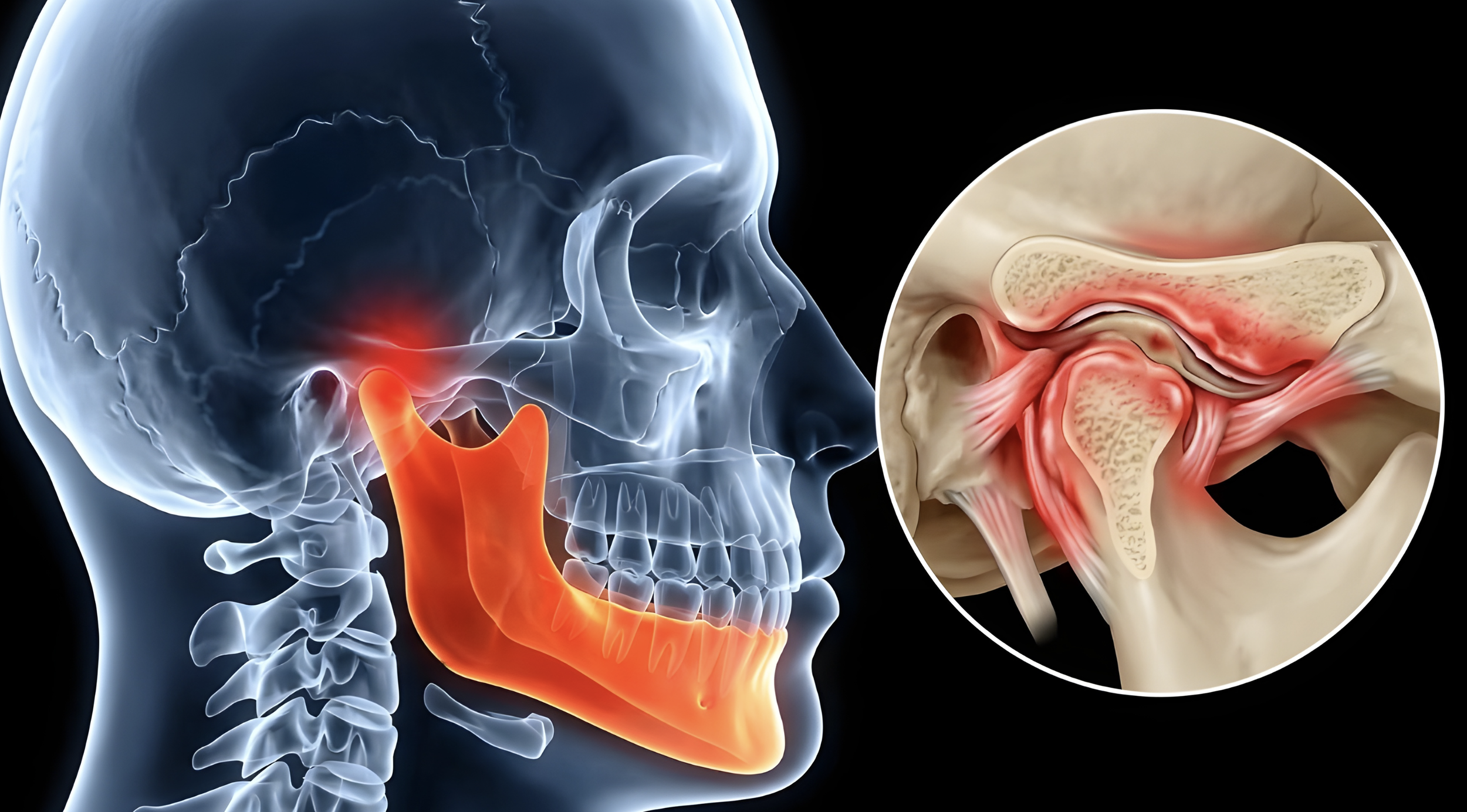
TMJ
Jaw pain is hard to pin down because it comes from several places at once: the joint itself, the muscles that move it, the way the teeth meet, or the clenching that goes on all night. Working out which one is driving your symptoms is the part that determines everything after.
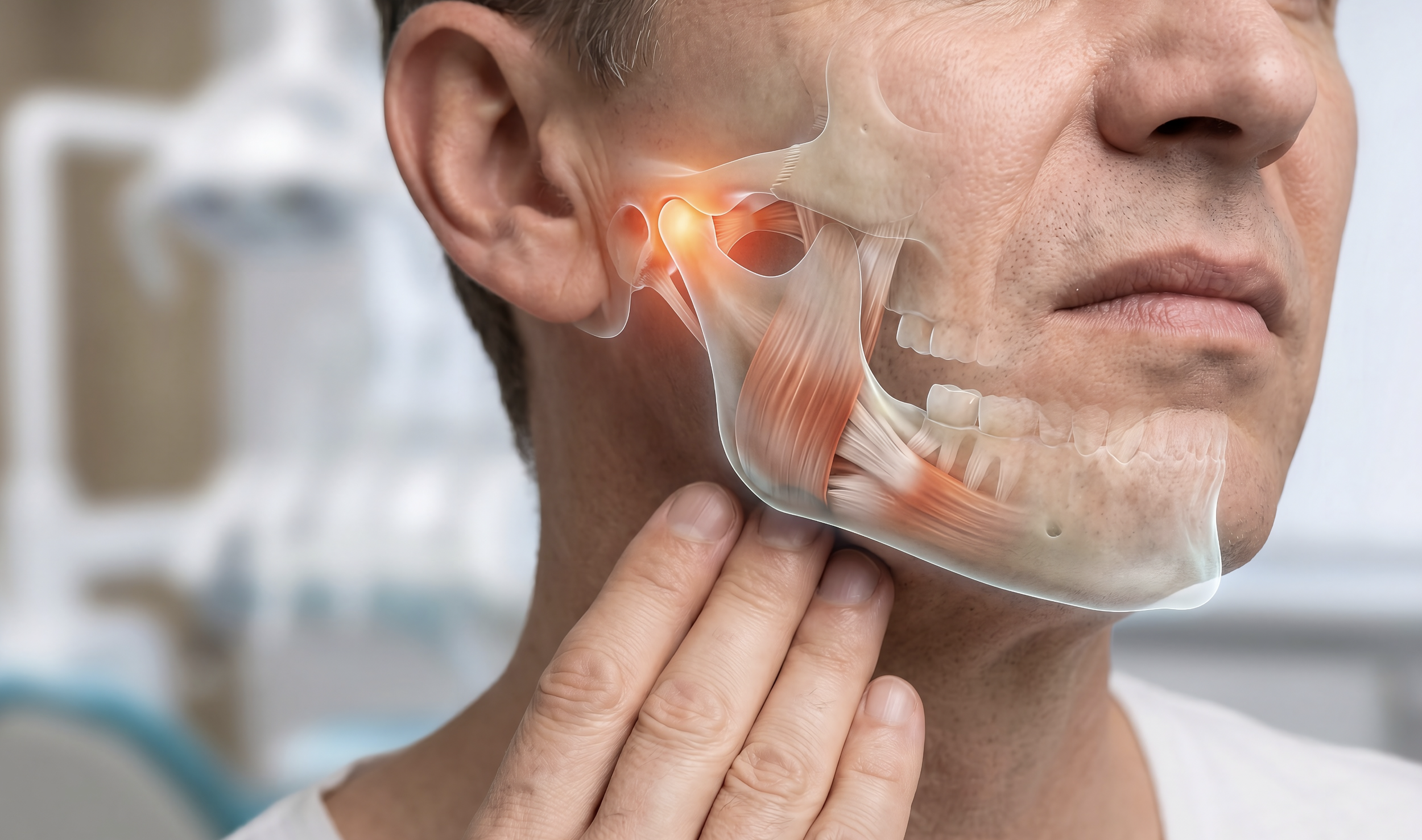
What is TMJ treatment?
The temporomandibular joint connects the lower jaw to the skull, and it is the only joint in the body that has to work in perfect coordination with an identical one on the other side. When something in that system goes wrong, the symptoms are wide-ranging: pain in front of the ear, clicking or popping, a jaw that catches or locks, headaches, difficulty chewing, tension that runs down into the neck.
Most people say "TMJ" for any of this. The joint is the TMJ, and disorders affecting it are TMD. The distinction matters because a joint problem and a muscle problem look similar from the outside and are treated completely differently. That is what the evaluation is for.
Most TMJ problems do not need surgery. Many settle with a change in habits, an anti-inflammatory approach, a night guard, or relaxing overactive jaw muscles. Surgery is reserved for cases where there is a specific structural problem in the joint, or where conservative treatment has been tried properly and has not worked.
Dr. Brendan Wu has published peer-reviewed research on TMJ disorders and corrective jaw surgery. He is a Harvard and NYU-trained oral and maxillofacial surgeon with degrees in both dentistry and medicine. Evaluations at both the Portland and Hood River offices.
-
01
History and symptoms
The conversation comes before the exam. When it hurts, what makes it worse, whether it clicks or locks, what you have already tried, whether you clench or grind, and how much it is affecting your sleep and eating.
-
02
Examination and imaging
Dr. Wu measures how far the jaw opens, listens to the joint through its range, checks the bite, and palpates the muscles to find where the tenderness actually sits. Imaging follows if the exam suggests something structural in the joint.
-
03
Working out the cause
Muscle, joint, bite, habit, or a combination. Dr. Wu explains what he found and what it points to, including the possibility that the answer is something to manage rather than something to fix.
-
04
Treatment and follow-up
Conservative options come first for most people. Where a joint problem is confirmed and has not responded to those, surgical options are discussed properly, with the reasoning and the expected outcome laid out before anything is scheduled. Either way, we follow up and adjust.

FAQ's
What causes TMJ disorders?
1
Common causes include clenching or grinding, jaw injury, arthritis in the joint, or a bite that puts uneven pressure on one side. Often it's a combination rather than one single cause, which is why the evaluation matters.
Will it get worse if I don't treat it, or can it go away on its own?
2
It depends on the cause. Muscle-related symptoms often improve with habit changes or a night guard, while a structural joint problem is less likely to resolve on its own. That's part of what the evaluation is for.
Is TMJ treatment covered by insurance?
3
It varies. Because TMJ sits between dental and medical care, some treatments are covered by one, some by the other, and some by neither. Our team can help you figure out what applies to your plan.

Advanced Training in Dentistry and Medicine
Dr. Wu earned his dental degree from Harvard, his medical degree from NYU Grossman School of Medicine, and a master's degree in immunology from Harvard Medical School. His extensive training in both dentistry and medicine provides a comprehensive foundation for implant surgery, bone grafting, anesthesia, and the management of complex surgical cases.