
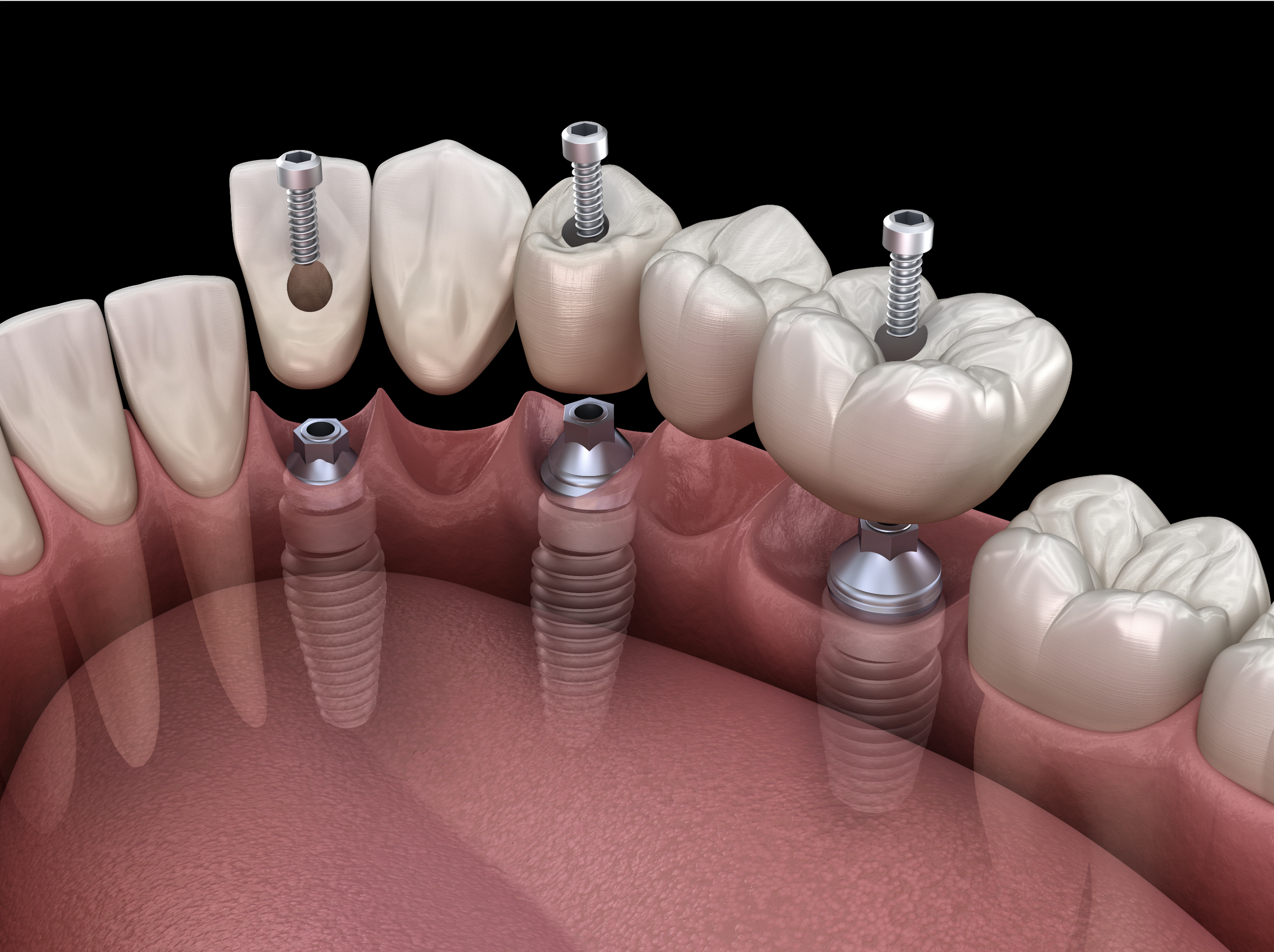
Dental implants
A dental implant is a small titanium post placed in the jawbone to replace the root of a missing tooth. After it heals and integrates into the surrounding bone, your dentist attaches a natural-looking replacement crown to the implant. The result is a strong, stable solution that can look, feel, and function much like a natural tooth.

What are dental implants?
Dental implants provide a stable foundation for replacing one or more missing teeth. Each implant is a biocompatible titanium post placed in the jawbone, where it functions similarly to a natural tooth root. As the implant integrates with the surrounding bone, it helps maintain bone support and creates a secure base for the final restoration.
At Mountainside Oral Surgery, Dr. Brendan Wu develops an individualized surgical plan based on each patient’s anatomy, health, and restorative needs. Using detailed 3D imaging and carefully selected anesthesia options, our team plans each procedure with an emphasis on precision, comfort, and predictable healing. Contact Mountainside Oral Surgery to schedule a dental implant consultation.
-
01
Consultation and imaging
It starts with a scan and a conversation. Dr. Wu looks at bone volume, the pattern of tooth loss, and what the site will actually support, then walks you through the options. Nobody is moved along faster than they want to be.
-
02
Planning the surgery
If implants are the right call, the digital scan becomes a surgical guide built for your anatomy. [In-house 3D printing means it is made here.] The guide is what keeps the placement accurate and the surgery small.
-
03
Placement
The implant goes in during a single in-office procedure, with [IV sedation] available. Where the site allows, Dr. Wu places an immediate implant with a temporary crown, so you are not walking around with a gap while it heals. Implant systems are chosen per case based on your anatomy, not on what happens to be in the drawer.
-
04
Healing and restoration
The post needs a few months to fuse with the bone. Once it has, we coordinate with your dentist to fit the final crown, bridge or arch.


FAQ's
Is getting a dental implant painful?
1
Local anesthesia numbs the treatment area, so you should not feel pain during implant placement. Sedation may also be an option to help you relax. Some soreness and swelling are normal afterward, and your surgeon will provide instructions to help you manage discomfort as you heal.
How long does the dental implant process take?
2
The full process typically takes several months. Initial healing happens much sooner, but the implant needs time to bond with your jawbone before the final crown is attached. Your timeline depends on your healing and whether you need additional procedures, such as a tooth extraction or bone graft. During your consultation, your surgeon will explain what to expect.
How long do dental implants last?
3
Dental implants are designed to be a long-term solution. With daily brushing, flossing, and regular dental visits, the implant itself can last a lifetime, although results vary. The crown attached to it may need replacement over time due to normal wear. Keeping your gums healthy and avoiding tobacco help support long-term success.

Advanced Training in Dentistry and Medicine
Dr. Brendan Wu is an oral and maxillofacial surgeon with advanced education in both dentistry and medicine. He earned his dental degree from Harvard School of Dental Medicine, his medical degree from NYU Grossman School of Medicine, and a master’s degree in immunology from Harvard Medical School. His comprehensive academic and surgical training supports his expertise in dental implant surgery, bone grafting, anesthesia, facial trauma, and the management of complex oral and maxillofacial conditions.